
dodge journey 2017 owners manual
Dodge continues its legacy with robust vehicles, and the 2017 Journey embodies this spirit, offering a versatile option for families and adventurers alike.
Overview of the Vehicle
The 2017 Dodge Journey presents itself as a mid-size crossover SUV, skillfully blending practicality with a touch of sporty styling. It’s designed to cater to active lifestyles, offering available seating for up to seven passengers across three rows. This flexibility makes it a compelling choice for growing families or those frequently transporting groups.
Distinguished by its bold front grille and sculpted body lines, the Journey doesn’t shy away from making a statement. Inside, the cabin prioritizes comfort and convenience, featuring user-friendly technology and ample storage solutions. The vehicle aims to deliver a balanced driving experience, combining a comfortable ride with responsive handling. Recent news highlights Dodge’s continued commitment to performance and innovation across its lineup, a trait subtly reflected in the Journey’s design and features. It stands as a testament to Dodge’s enduring presence in the automotive market.

Target Audience and Vehicle Positioning
The 2017 Dodge Journey is strategically positioned to appeal to families seeking a versatile and affordable SUV. Its target demographic includes individuals and couples with children, or those who regularly need to accommodate multiple passengers. The Journey also attracts buyers who value practicality and space without sacrificing style or a moderate level of performance.
Within the competitive mid-size crossover segment, the Journey occupies a space between more premium offerings and budget-focused models. Dodge aims to provide a compelling value proposition, offering a generous feature set and spacious interior at a competitive price point. Recent Dodge announcements regarding the Charger and Viper demonstrate a brand focus on enthusiast appeal, subtly influencing the Journey’s sporty aesthetic. It’s a vehicle designed for everyday life, offering a blend of functionality and a touch of Dodge’s signature character.

Understanding Your Vehicle’s Key Features
Dodge’s 2017 Journey boasts a range of features, from its capable engine options to its adaptable drivetrain, ensuring a comfortable and confident driving experience.
Engine Specifications and Performance
The 2017 Dodge Journey offers two engine choices, catering to diverse driving needs and preferences. The standard engine is a 2.4-liter inline-4 engine, producing 173 horsepower and 166 lb-ft of torque. This engine provides adequate power for everyday commuting and light-duty tasks, paired with a four-speed automatic transmission.
For those seeking enhanced performance, an optional 3.6-liter Pentastar V6 engine is available, delivering a robust 283 horsepower and 260 lb-ft of torque. This engine is coupled with a six-speed automatic transmission, offering smoother shifts and quicker acceleration. The V6 engine significantly improves towing capacity and provides a more engaging driving experience.
Fuel economy varies depending on the engine and drivetrain configuration. The 2.4-liter engine achieves an estimated 19 mpg city / 26 mpg highway, while the 3.6-liter V6 offers around 16 mpg city / 24 mpg highway. Performance figures are estimates and can vary based on driving conditions and vehicle load.
Transmission Options and Operation
The 2017 Dodge Journey provides two transmission options, directly linked to the engine choice. Vehicles equipped with the 2.4-liter four-cylinder engine utilize a four-speed automatic transmission, designed for smooth and reliable operation in everyday driving scenarios. This transmission features standard automatic shifting, but also includes an “AutoStick” feature allowing for some degree of driver-selected gear control.
Models featuring the more powerful 3.6-liter Pentastar V6 engine are paired with a six-speed automatic transmission. This transmission offers quicker, more refined shifts and contributes to the V6’s enhanced performance. Like the four-speed, it also incorporates the AutoStick functionality for manual gear selection.
To shift into gear, ensure the vehicle is completely stopped. Depress the brake pedal firmly and move the gear selector to the desired position (Park, Reverse, Neutral, Drive). The transmission is electronically controlled, and proper operation relies on maintaining the vehicle’s recommended fluid levels.
Drivetrain (FWD, AWD) Explained
The 2017 Dodge Journey offers drivers a choice between two drivetrain configurations: Front-Wheel Drive (FWD) and All-Wheel Drive (AWD). The standard drivetrain is FWD, delivering efficient operation and optimal fuel economy for typical driving conditions. Power is sent to the front wheels, providing responsive handling and stability on paved roads.
For enhanced traction and control, particularly in inclement weather or on challenging terrain, the available AWD system is a valuable asset. This intelligent system automatically detects wheel slip and redistributes torque to all four wheels, maximizing grip and stability.
The AWD system operates primarily in FWD mode to conserve fuel, engaging the rear wheels only when needed. A dedicated AWD lock button allows drivers to manually engage the AWD system for consistent all-wheel power delivery in specific situations, like deep snow or mud. Regular maintenance of the AWD system is crucial for optimal performance.

Operating the 2017 Dodge Journey
Familiarizing yourself with the vehicle’s controls is essential for a safe and enjoyable driving experience; understanding these features will maximize your control.
Starting and Stopping Procedures
To start your 2017 Dodge Journey, ensure the vehicle is in Park (P) or Neutral (N), and firmly depress the brake pedal. Insert the key into the ignition or, if equipped, press the start/stop button while applying pressure to the brake. The engine will then crank and start. Allow the engine to run for a brief period before driving;
When stopping the vehicle, gently apply the brakes to come to a smooth and controlled stop. Once fully stopped, shift the gear selector into Park (P) and engage the parking brake. Turn the ignition key to the OFF position or press the start/stop button to turn off the engine. Always ensure the vehicle is completely stopped before shifting into Park to prevent potential damage to the transmission.
Remember to always buckle your seatbelt before starting the engine and ensure all passengers are properly restrained. Regularly check the functionality of your brake lights and turn signals for safe operation.
Understanding the Dashboard Indicators
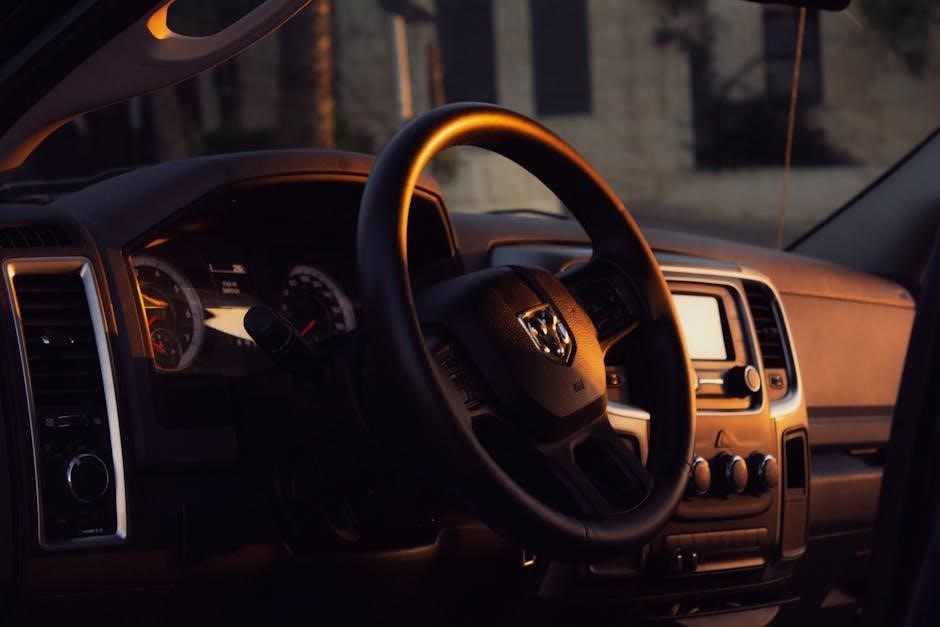
Your 2017 Dodge Journey’s dashboard features a series of indicator lights and gauges providing crucial information about the vehicle’s status. The Check Engine light illuminates when the engine control system detects a malfunction. A steady ABS light indicates a problem with the anti-lock braking system, while a flashing light signals system activation during braking.
The Airbag warning light signals a potential issue with the airbag system, requiring immediate attention. A low Fuel level indicator warns you when to refuel. The Battery warning light indicates a charging system problem. Pay close attention to the Temperature gauge to avoid overheating.
Familiarize yourself with all indicator symbols in your owner’s manual. Ignoring warning lights can lead to more significant and costly repairs. Regularly monitor these indicators during operation for a safe driving experience.
Using the Gear Selector
The 2017 Dodge Journey’s gear selector, typically located on the steering column or center console, controls the transmission. ‘P’ stands for Park, locking the transmission and preventing vehicle movement. ‘R’ is for Reverse, used for backing up. Ensure the vehicle is completely stopped before shifting into Reverse.
‘N’ represents Neutral, allowing the wheels to rotate freely. Use Neutral when towing or during certain emergency situations. ‘D’ is for Drive, the standard setting for forward motion. The transmission automatically shifts through gears. Some models offer manual shift control with ‘+/-’ options.
Always come to a complete stop before changing gears. Avoid shifting while driving at high speeds. Familiarize yourself with the gear selector’s operation for smooth and safe driving. Refer to your owner’s manual for specific instructions and safety precautions.

Maintenance and Service
Regular upkeep is crucial for your 2017 Journey’s longevity and performance; adhering to the recommended schedule ensures optimal operation and prevents costly repairs.
Recommended Maintenance Schedule
Maintaining your 2017 Dodge Journey involves a structured schedule to ensure reliability and longevity. Every 7,500 miles or six months, whichever comes first, requires an oil and filter change, tire rotation, and a comprehensive multi-point inspection. This inspection covers vital components like brakes, fluids, belts, and hoses.
At 15,000 miles, add to the previous services a cabin air filter replacement and an engine air filter check. By 30,000 miles, consider replacing the engine air filter, inspecting the fuel lines and connections, and checking the automatic transmission fluid. Further services at 60,000 miles and beyond include spark plug replacement, coolant flush, and a more detailed inspection of suspension components.
Always refer to your 2017 Dodge Journey’s owner’s manual for the most accurate and detailed maintenance intervals, as driving conditions can influence service needs. Consistent adherence to this schedule will help keep your Journey running smoothly for years to come.

Fluid Checks and Replacements (Oil, Coolant, etc.)
Regular fluid checks are crucial for your 2017 Dodge Journey’s health. Engine oil should be checked monthly and replaced every 7,500 miles with the recommended grade (typically 5W-20 or 5W-30 – confirm in your owner’s manual). Coolant levels should also be inspected monthly, ensuring a 50/50 mix of antifreeze and distilled water. Flush and replace the coolant every 30,000 miles.
Brake fluid absorbs moisture over time, reducing effectiveness; it should be inspected annually and flushed every two to three years. Power steering fluid levels should be checked periodically, and transmission fluid should be inspected and potentially replaced around 30,000-60,000 miles, depending on driving conditions.
Windshield washer fluid should be topped up as needed. Always use fluids meeting Dodge’s specifications to avoid damage to your vehicle’s systems. Proper fluid maintenance ensures optimal performance and prevents costly repairs.
Tire Information and Maintenance
Maintaining proper tire pressure is vital for safety, fuel efficiency, and tire longevity on your 2017 Dodge Journey. Refer to the sticker on the driver’s side doorjamb for the recommended PSI (pounds per square inch) – typically around 32-36 PSI. Check tire pressure monthly when tires are cold.
Regularly inspect tires for wear and damage, including cuts, bulges, and uneven tread wear. Rotate tires every 5,000-7,500 miles to promote even wear. The 2017 Journey typically uses tires in sizes like 225/60R17 or 235/55R19, depending on the trim level.
Ensure tires have sufficient tread depth; a simple test involves inserting a penny upside down into the tread grooves – if you can see all of Lincoln’s head, it’s time for replacement. Proper alignment is also crucial for even tire wear and optimal handling.

Safety Features and Systems
Your 2017 Dodge Journey prioritizes occupant protection with a comprehensive suite of safety technologies, including airbags, ABS, and ESC systems for enhanced security.
Airbag System Details
The 2017 Dodge Journey is equipped with an advanced airbag system designed to provide occupant protection in the event of a collision. This system includes front airbags for both driver and passenger, side-curtain airbags for all rows, and front seat-mounted side airbags. These airbags are designed to work in conjunction with the seat belts to help reduce the risk of injury.
It’s crucial to understand that the airbags are supplemental restraints and are not a substitute for properly fastened seat belts. Airbags deploy with significant force, and while they can significantly reduce injury, they can also cause abrasions or minor injuries. Always ensure all occupants are properly restrained before operating the vehicle.
The airbag system includes a sensor that detects the severity of a collision and determines whether or not to deploy the airbags. Factors such as impact speed and direction are considered. Regularly inspect the airbags for any signs of damage or tampering, and consult a qualified technician for any concerns regarding the system’s functionality.
Anti-lock Braking System (ABS)
The 2017 Dodge Journey features an Anti-lock Braking System (ABS) designed to help maintain steering control during hard braking situations and reduce the risk of wheel lockup. When ABS activates, you may feel a pulsing sensation in the brake pedal – this is normal and indicates the system is working correctly. Maintain firm, steady pressure on the brake pedal during ABS activation; do not pump the brakes.
ABS operates by monitoring the speed of each wheel and automatically modulating brake pressure to prevent wheel lockup. This allows you to steer around obstacles while braking, which is often impossible with conventional brakes. The system is most effective on slippery surfaces like wet roads, snow, or ice.
A warning light on the dashboard will illuminate if the ABS system detects a malfunction. If this light remains on, have the system inspected by a qualified technician as soon as possible. Regular brake inspections are crucial to ensure optimal ABS performance and overall braking safety.
Electronic Stability Control (ESC)
The 2017 Dodge Journey is equipped with Electronic Stability Control (ESC), a vital safety system designed to assist in maintaining directional control during challenging driving conditions. ESC detects when the vehicle is starting to skid or lose control, and selectively applies brakes to individual wheels to help steer the vehicle back onto its intended path.
When ESC activates, you may notice a slight pulsing sensation in the brake pedal and potentially hear the system working. It’s crucial to maintain a firm grip on the steering wheel and avoid abrupt steering maneuvers. ESC works in conjunction with the Anti-lock Braking System (ABS) to provide enhanced stability.
A dedicated ESC indicator light on the instrument panel will illuminate when the system is actively engaged. If the ESC light remains illuminated continuously, it indicates a system malfunction requiring professional attention. Regular vehicle maintenance, including tire checks, is essential for optimal ESC performance.

Interior Features and Technology
The 2017 Journey’s cabin offers a blend of comfort and convenience, featuring an intuitive infotainment system and available Bluetooth connectivity for seamless integration.
Infotainment System Operation
Your 2017 Dodge Journey’s infotainment system serves as the central hub for audio, navigation (if equipped), and vehicle settings. The system typically features a touchscreen display, offering intuitive control over various functions. Familiarize yourself with the main menu layout, which provides access to radio, media playback (USB, auxiliary), Bluetooth connections, and climate control adjustments.
To adjust volume, use the steering wheel-mounted controls or the dedicated volume knob on the dashboard. Navigating through menus is generally done via touchscreen swipes or by using the directional buttons surrounding the screen. Explore the system’s settings to personalize preferences such as display brightness, language, and clock settings. The Uconnect system, common in this model year, often supports voice commands for hands-free operation of certain features. Refer to the full owner’s manual for detailed instructions on specific Uconnect functionalities and troubleshooting tips.
Bluetooth Connectivity and Pairing
The 2017 Dodge Journey’s Bluetooth system allows for wireless connection of compatible smartphones and audio devices. To initiate pairing, first ensure Bluetooth is enabled on your mobile device. On the vehicle’s infotainment screen, navigate to the “Phone” or “Bluetooth” menu and select “Pair Device.” The system will begin searching for available devices.
Once your device appears on the screen, select it to begin the pairing process. You may be prompted to enter a PIN code (typically “0000” or “1234”) on both your phone and the vehicle’s display. After successful pairing, your phone’s contacts and call history may be accessible through the infotainment system. You can store multiple devices in the system’s memory, but only one can be actively connected at a time. Refer to the owner’s manual for troubleshooting pairing issues and managing connected devices.
Climate Control System
The 2017 Dodge Journey features a user-friendly climate control system designed to maintain optimal comfort for both driver and passengers. Manual and automatic temperature controls are available depending on the trim level. To adjust the temperature, use the rotary knobs or digital controls. The system offers settings for heating, cooling, and ventilation.
Airflow can be directed to various vents – face, feet, or defrost – using the mode selector buttons. The fan speed is adjustable to control the intensity of the airflow. For quicker cooling or heating, activate the “Max AC” or “Max Heat” function. The rear passengers may have dedicated climate controls, depending on the vehicle configuration. Regularly check and maintain the cabin air filter for optimal air quality and system performance, as detailed in the maintenance schedule.

Vehicle Identification and Documentation
Your 2017 Dodge Journey’s unique VIN is crucial for identification, warranty claims, and service history; keep your owner’s manual and documentation secure.
Decoding Your Vehicle Identification Number (VIN)
The Vehicle Identification Number (VIN) is a unique 17-character code assigned to your 2017 Dodge Journey. It’s essentially the vehicle’s fingerprint, providing crucial information about its origins, specifications, and history. You can locate the VIN on the driver’s side dashboard near the windshield, on the driver’s side doorjamb, and on your vehicle’s registration and insurance documents.
Each character within the VIN holds specific meaning. The first three characters identify the manufacturer (Dodge), the next five indicate the model, body style, and engine type, followed by characters detailing the year of manufacture and assembly plant. The final four characters represent the sequential production number. Online VIN decoders, readily available through various automotive websites, can translate this code into a comprehensive report detailing your Journey’s original equipment, safety features, and recall history. Understanding your VIN is vital for accurate service, parts ordering, and verifying the vehicle’s authenticity.
Warranty Information
Your 2017 Dodge Journey is protected by a comprehensive warranty package designed for peace of mind. The Basic Limited Warranty typically covers defects in materials or workmanship for a period of 3 years or 36,000 miles, whichever comes first. Additionally, the Powertrain Limited Warranty extends coverage for major engine, transmission, and drivetrain components for 5 years or 60,000 miles, offering extended protection against significant mechanical failures.
The Corrosion Limited Warranty safeguards against rust and corrosion for a specified period, often 5 years or 100,000 miles. It’s crucial to retain all service records, as proper maintenance is a requirement for warranty validity. For detailed information regarding specific coverage terms, limitations, and claim procedures, please refer to the separate Warranty Booklet provided with your vehicle. You can also find comprehensive warranty details on the official Dodge website or by contacting your authorized Dodge dealership.
Leave a Reply
You must be logged in to post a comment.